

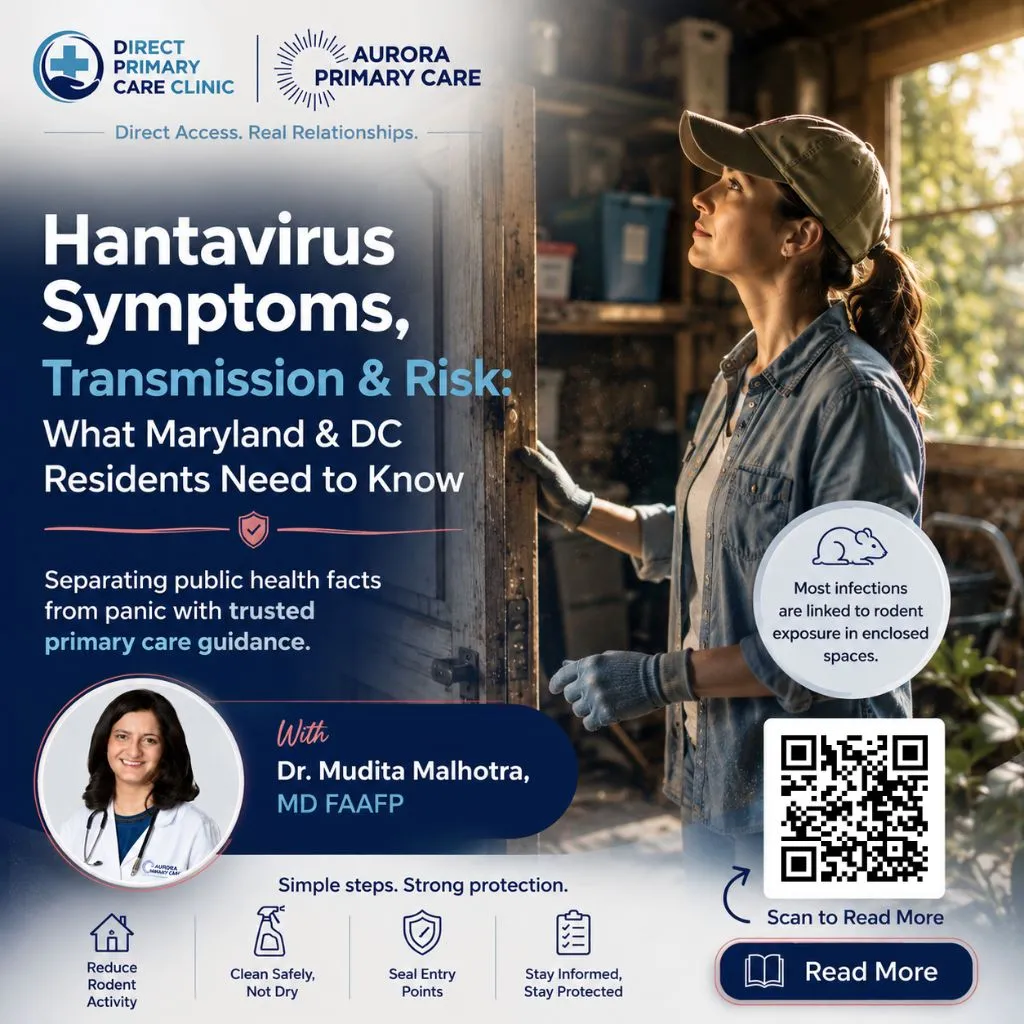
Recent headlines about hantavirus linked to an expedition cruise ship in South America have understandably raised questions and many of my patients in Maryland and the DMV area have been asking about it. Public health agencies are currently monitoring a small cluster of suspected and confirmed cases associated with international travel.
At the same time, it is important to place these reports in the proper medical context. For most people living in Maryland, DC, and Northern Virginia, hantavirus remains a very rare infection. The recent cases involve a specific strain called Andes virus associated with travel in parts of South America. Public health officials continue to describe the overall risk to the general public as low.
Still, situations like this are a useful opportunity to understand what hantavirus actually is, how it spreads, what symptoms to watch for, and how to reduce exposure risk. As a primary care physician at Aurora Primary Care, I try to help patients separate news-driven anxiety from actionable medical information.
What Is Hantavirus?
“Hantavirus” refers to a group of viruses typically carried by rodents. Humans most commonly become infected after exposure to rodent urine, droppings, or saliva especially in enclosed spaces where contaminated particles can become airborne.
In the United States, hantavirus infection most often causes a condition called Hantavirus Pulmonary Syndrome (HPS), which can affect the lungs and cardiovascular system. Fortunately, infections remain uncommon. Most cases in the United States have historically occurred in western states rather than the Mid-Atlantic region.
Why Is Hantavirus in the News Right Now?
The recent attention comes from a cluster of hantavirus cases linked to passengers aboard an expedition cruise ship that traveled near Argentina and Antarctica. International public health agencies have been monitoring exposed travelers closely.
Part of the concern relates to the specific virus involved. The Andes strain of hantavirus, found in parts of South America, is unusual because limited person-to-person transmission has occasionally been documented under very close-contact circumstances. That makes the situation medically important and worthy of monitoring, but it does not mean this is becoming another widespread respiratory pandemic.
One of the challenges with modern health news is that rare diseases can quickly become highly visible online, which sometimes creates the impression that a condition is rapidly spreading locally when that is not actually the case. For residents of Maryland, DC, and Virginia, there is currently no evidence of local community transmission.
How Do People Usually Get Hantavirus?
In North America, hantavirus infection is usually associated with exposure to rodents in enclosed or semi-enclosed spaces such as:
- cabins, sheds, garages, or barns
- crawl spaces or storage buildings
- or enclosed areas that have been vacant for long periods
People are most at risk when cleaning or disturbing rodent-infested spaces, particularly if dry sweeping or vacuuming stirs contaminated particles into the air. Importantly, ordinary day-to-day activities in suburban communities including those throughout the Maryland and Northern Virginia suburbs do not place most people at meaningful risk.
What Are the Symptoms of Hantavirus?
Early hantavirus symptoms can resemble many other viral illnesses, which is one reason diagnosis may not be immediately obvious. Symptoms typically begin 1 to 8 weeks after exposure and may include:
- fever and chills
- significant fatigue
- muscle aches, particularly in larger muscle groups such as the hips, thighs, back, and shoulders
- headache and dizziness
- gastrointestinal symptoms including nausea, vomiting, diarrhea, or abdominal discomfort
As the illness progresses, some patients develop cough, chest tightness, or shortness of breath as the lungs become involved. One reason physicians pay close attention to travel history and environmental exposure is because the early symptoms can initially resemble influenza, COVID, or other common viral illnesses. Context where you’ve been and what you’ve been exposed to often becomes an important part of recognizing when additional evaluation is needed.
How Can You Reduce Your Risk of Hantavirus Exposure?
Fortunately, there are practical steps that significantly reduce the risk of hantavirus exposure.
Reduce Rodent Activity Around the Home
- Keep food storage areas clean.
- Store food, pet food, and garbage in sealed containers with tight-fitting lids.
- Reduce outdoor clutter such as wood piles, trash piles, and unused storage areas where rodents may nest.
Use Caution When Cleaning Enclosed Spaces
If a garage, shed, cabin, or storage area appears to have rodent droppings:
- air out the space for at least 30 minutes before cleaning
- avoid sweeping or vacuuming dry droppings
- spray affected areas with disinfectant or diluted bleach solution first
- and wear gloves while cleaning
The goal is to avoid stirring contaminated particles into the air.
Be Mindful During Outdoor Activities
When camping or spending time outdoors:
- avoid sleeping near rodent burrows, garbage areas, or wood piles
- avoid disturbing rodent droppings
- and use mats or raised cots rather than sleeping directly on the ground
Should People in Maryland, DC, and Northern Virginia Be Concerned?
For most people in the DC, Maryland, and Northern Virginia region, the answer is probably not in an immediate sense. Hantavirus remains rare in the eastern United States, and there is no evidence of widespread community transmission in our area related to the recent international cases.
That said, awareness is still useful especially for:
- travelers returning from Argentina, Chile, or other affected regions of South America
- people with significant rodent exposure at home or work
- campers or hikers cleaning remote or long-vacant structures
- or individuals working in enclosed spaces with rodent infestation
In medicine, there is often a balance between awareness and anxiety. The goal is not to become fearful of every headline, but to understand when information is relevant to your own health and circumstances.
When Should Someone Seek Medical Attention?
You should contact a healthcare professional if:
- you develop significant fever and respiratory symptoms after known rodent exposure
- you recently traveled to an area associated with reported hantavirus cases (including South America)
- or you experience worsening shortness of breath after a viral-type illness
Fortunately, most viral illnesses are not hantavirus. But if a patient has concerning symptoms combined with a compatible exposure history, it is important for clinicians to consider the possibility early. As with many infections, context matters as much as symptoms themselves.
Why Primary Care Still Matters During Public Health Stories Like This
One of the less discussed effects of constant health news is that many people are left trying to interpret complicated medical information on their own. At Aurora Primary Care, Dr. Mudita Malhotra works with patients in Maryland and the DMV area to do exactly that providing context, nuance, and individualized guidance rather than alarm.
Often the most valuable part of a primary care visit is not simply ordering tests or prescribing medication. It is helping patients understand whether a headline applies to them, whether symptoms are concerning, what level of risk is realistic, and when reassurance is appropriate. Most public health situations are not emergencies for the average person but they are opportunities to ask thoughtful questions and make informed decisions calmly rather than reactively.
A Final Thought
Infectious disease headlines tend to create two opposite reactions online: either panic or dismissal. Good medicine usually lives somewhere in between.
The recent hantavirus reports are medically important and worth understanding, particularly for travelers and public health professionals. At the same time, for most people in Maryland, DC, and Northern Virginia, this is not something that should create day-to-day fear. What it should encourage is something simpler:
- staying informed from reliable sources
- understanding practical prevention measures
- maintaining access to thoughtful, ongoing primary care
- and remembering that context matters when interpreting health news
Have questions about your health or a recent travel exposure? We’re here to help.
Aurora Primary Care is welcoming new patients in Maryland and the DMV area. Whether you have specific symptoms, concerns about a recent trip, or simply want to establish care with a primary care physician you can trust, Dr. Mudita Malhotra offers a Meet & Greet appointment as a no-pressure first step.
➤ Schedule your appointment: Schedule a Free Meet & Greet | ➤ Questions? Contact us directly.
Frequently Asked Questions
Q1. Is hantavirus contagious between people?
Ans: Most hantavirus strains are not known to spread person-to-person. The Andes strain involved in the recent South American cases is unusual because limited human-to-human transmission has occasionally been documented in very close-contact settings.
Q2. Should people in Maryland or DC be worried about hantavirus right now?
Ans: For most residents of Maryland, DC, and Northern Virginia, the current risk is very low. The recent cases involve a specific travel-associated situation in South America rather than widespread community transmission in the US. If you have concerns or a relevant travel history, contact your primary care physician.
Q3. What are the first symptoms of hantavirus?
Ans: Early symptoms often include fever, chills, fatigue, muscle aches, headache, dizziness, nausea, vomiting, diarrhea, and abdominal discomfort. Later stages can include shortness of breath and respiratory involvement.
Q4. How can I reduce my risk of hantavirus exposure in Maryland?
Ans: The best prevention involves minimizing exposure to rodents and safely cleaning rodent-infested areas without stirring contaminated dust into the air. This is particularly relevant when cleaning garages, storage sheds, or vacation properties that have been vacant for extended periods.
Q5. How common is hantavirus in the United States?
Ans: Hantavirus remains rare in the United States, with most reported cases historically occurring in western states. The Mid-Atlantic region, including Maryland, DC, and Virginia, has seen very few cases.
Q6. When should I see a doctor about possible hantavirus exposure?
Ans: Contact a healthcare provider if you develop fever and respiratory symptoms after significant rodent exposure, or if you have recently traveled to South America and are experiencing flu-like illness. At Aurora Primary Care, we can help you assess your symptoms and determine appropriate next steps.